Blogs / Top Web Design Trends In UAE For 2026: What Modern Websites Are Doing Differently?
Top Web Design Trends In UAE For 2026: What Modern Websites Are Doing Differently?
In 2026, web design has high relevance in business success by creating a more favorable experience that engages customers and drive conversion...
December 24, 2025
Today, business websites are no longer good to have; they are a necessity. And, when you are operating in a rapidly evolving and immensely competitive market like the UAE, a well-designed website gives you a strategic edge. A modern website empowers you to capture the attention of visitors, engage them, and convert them into paying customers.
But the real question is how to design a modern website that is intuitive, interactive, and immersive, and captures the cultural nuances of the region? Well, let’s find out.
2026 UAE Web Design Snapshot — Key Takeaways
In 2026, web design in the UAE is driven by performance, personalization, and cultural relevance. Modern websites are expected to load in under two seconds, deliver bilingual (Arabic + English) experiences, support local payment behaviors, and feel premium by design.
Artificial intelligence, mobile-first UX, and compliance-ready architecture are no longer optional—they are competitive necessities and essential web design features for modern businesses. Companies that align their website strategy with these expectations are better positioned to attract, engage, and convert the UAE’s digitally mature audience.
Why Web Design In The UAE Requires A Different Approach
Web design in the UAE differs significantly from global markets due to a combination of high mobile penetration. Luxury-driven consumer expectations and a culturally diverse audience. Users expect fast, app-like experiences that feel premium, intuitive, and personalized.
Additionally, bilingual accessibility, strong data privacy awareness, and seamless payment experiences influence how websites are planned and designed. As a result, businesses operating in the UAE must go beyond global design trends and adopt region-specific UX, performance, and compliance standards.
Top 10 Web Design Trends In The UAE For 2026
Web design is rapidly changing owing to the emergence of different technologies. Hence, it is no longer about aesthetics; speed, cultural appropriation, and seamless user experience are getting preference. Here are some of the leading trends that are redefining website design in 2026 -
Trend #1 — Extreme Speed And Mobile-First Performance
The first trend that is shaping website design in the UAE is speed and mobile compatibility. In 2026, a website should instantly load, ideally within 2 seconds, and that is also seamlessly. Otherwise, users bounce off, which negatively impacts its reputation. The widespread adoption of smartphones and the internet has made this a minimum requirement.
Besides speed, a website in 2026 should also be mobile-compatible. It means the website, when opened on a smaller screen. Must maintain its design integrity and be as intuitive to use as it is on the desktop. The ‘cherry on top’ here is Google’s recent mobile-first indexing policy.
It means every website will be indexed for mobile usage first and then for desktop. However, you can't blame the search engine here. As the global website traffic coming from mobile devices is increasing every year.
Data watch: Mobile devices generate the majority of global website traffic, consistently accounting for around 60-64% of all web visits in 2025.
Additionally, Google Core Vitals now considers these two pointers as key ranking factors. Hence, businesses should look for performance and mobile optimization in their website design and development rather than just the layout, colors, and content.
Performance Benchmark: Websites that load within two seconds experience significantly lower bounce rates and higher engagement compared to slower sites. Even a one-second delay in page load can lead to noticeable drops in conversions, especially for mobile-first users in the UAE’s fast-paced digital environment.
Trend #2 — AI-Powered Personalization Becomes Standard
The next redefining web design in the UAE is artificial intelligence. The emergence of AI has transformed different aspects of business, including website development. Leveraging the power of AI tools, businesses are now designing hyper-personalized web experiences.
From dynamic content blocks to curated landing pages to AI chatbots that speak in Arabic and English. AI is enhancing engagement and conversion.
How? Well, AI is going through heaps of customer data to identify behavioral patterns, purchase history, browsing patterns, etc., and then tailor the design and content accordingly.
Are AI Features Necessary For UAE Websites? No, the AI features are not mandatory for the UAE websites, but they are good to have. With a digitally mature audience and strong government support for AI adoption, users are increasingly expecting a smarter and personalized experience. Hence, AI is quickly becoming a strategic advantage in modern website design.
Personalization impact: Websites using AI-driven personalization often experience higher session duration and improved engagement. And stronger conversion performance because users are served content aligned with their intent and behavior.
Trend #3 — Bilingual And RTL-First UX (Arabic + English)
The next UI UX trend for UAE-based web design is creating a bilingual and RTL-First website layout. Given the region's cultural diversity, businesses must address all demographics, which leads to this design principle.
Forward-thinking businesses are already implementing the English (LTR) and Arabic (RTL) layouts to make the website more intuitive and engaging for all audience segments.
Additionally, the focus of RTL-first UX design is to ensure that the Arabic content feels native, culturally appropriate, and visually balanced.
For instance, if you look at the Government websites of the UAE. They flawlessly switch between Arabic and English without any disruption to the user experience.
Trend #4 — Immersive Visuals, Micro-Interactions And Motion Graphics
In a competitive market like the UAE, every brand is vying for user attention, which is reflected in the web design trends of different brands. As a part of this effort, companies are increasingly leading towards more immersive digital experiences through high-quality visuals, subtle animations, micro-interactions, and story-based scrolling.
All of these are actively used to create an emotional connection with the audience, which can propel engagement and conversions.
Additionally, it is important to remember that, for the UAE market—where luxury, innovation, and premium branding make a difference—visual sophistication can be a major differentiating factor, especially when guided by an experienced digital marketing agency in Dubai that understands regional audience expectations.
Trend #5 — Designing For UAE Payment Behavior And Checkout
As online shopping is gaining traction in the UAE. Businesses need to focus more on improving the online retail capabilities of their site. Two key aspects of this exercise are simplifying the checkout process and integrating different payment methods.
Hence, the forward-thinking organizations are now supporting local payment preferences, including Google Pay, Apple Pay, and other local payment gateways. Additionally, they are also improving the checkout process by minimizing form fields, offering autofill, enabling guest checkout, etc.
Checkout Insight: Cart abandonment remains a significant challenge for ecommerce websites. Simplified checkout experiences, mobile-friendly forms, and trusted local payment methods play a critical role in improving transaction completion rates in the UAE.
Are Modern Web Technologies Expensive To Implement? No, modern web technologies are not necessarily expensive to implement. However, the final cost will depend on the complexity of the job. At the same time, it is important to remember that using modern frameworks may increase the upfront cost, but it reduces maintenance and future upgrade costs, which ultimately balances the total expenses.
Trend #6 — Data Privacy, Hosting & UAE Compliance In 2026
The next component of modern website design is meeting local compliance. The UAE has implemented strict data protection and privacy laws, which means unethical usage of data can get your business in serious trouble.
As a result, the leading businesses are now moving towards privacy-first UX, transparent data usage notices, and regionally compliant hosting solutions.
For instance, the healthcare and fintech websites in the UAE prominently display messages asking for consent to gather user data.
Trend #7 — Modular, Headless And Scalable Web Architecture
Scalability is essential for UAE-based businesses considering the opportunity this market offers. Therefore, to make the website comply with business requirements.
The leading website design company in the UAE is using headless CMS and modular design systems that also support scalable content marketing strategies across multiple digital channels.
This approach allows the brands to update content, scale features, and integrate new technologies without any major redesign.
Furthermore, this approach also supports an omnichannel experience. It means users receive a similar experience across the web, mobile, kiosks, and smart devices.
A classic example of this is the large ecommerce brands. They use a headless CMS to manage multilingual content across different digital touchpoints.
Trend #8 — Voice Search And Zero UI Patterns
The next trend to focus on for web design in the UAE is making the platform compatible with voice search and zero UI. The rise of smart voice assistants like Alexa, Gemini, and others has transformed website planning.
Today, websites contain more natural-language queries and conversational content. It helps with the ranking of voice search. Additionally, the zero UI pattern enables sites to operate without traditional buttons and forms, elevating the user experience.
These are the next frontier of user engagement, and businesses are actively working to include them in their web experience. Hence, your business website must go down this route as well to remain competitive.
How Does Neumorphism Or Soft UI Fit UAE Luxury Branding? Neumorphism or soft UI works well with UAE luxury branding when used subtly and strategically. The soft shadows, depth, and tactile feeling complement premium aesthetics, minimalism, and high-end digital experiences. However, it works better as an accent rather than a full design system.
Trend #9 — Asymmetrical Layout And Experimental Designs
Considering the market competition, every business is now trying hard to find any edge they can get to stand out. Here comes the idea of experimental website design, which breaks away from the conventional design grid system and tries out new asymmetrical responsive web design, bold fonts, vibrant colours, and other new ideas.
Therefore, when creative freedom is perfectly balanced with strategic user experience design, it ensures that users remain engaged and guided, creating the most impact.
Trend #10 — Progressive Web Apps With Native Like Convenience
Last but not least, progressive web apps (PWAs) are now bridging the gap between websites and mobile apps, significantly improving the user experience.
As a result, come 2026, UAE businesses are now considering investing in PWAs that provide offline access, push notifications, and app-like performance without the hassle of downloads and eating up device storage space. Additionally, PWAs are quick and cost-effective, which makes them ideal for companies targeting mobile-first audiences.
Mobile Adoption Insight: Progressive Web Apps perform exceptionally well in mobile-first regions like the UAE, where users value instant access, minimal storage usage, and seamless performance.
How These Web Design Trends Apply Across Key UAE Industries?
Different industries in the UAE apply these web design trends in distinct ways. Ecommerce brands focus heavily on speed, mobile UX, and checkout optimization to reduce friction and increase sales. Real estate and hospitality businesses prioritize immersive visuals, motion design, and storytelling to showcase properties and experiences.
Healthcare and fintech platforms emphasize data privacy, accessibility, and compliance-ready UX. Luxury brands rely on minimalism, premium visuals, and subtle interactions to convey exclusivity and trust.
These are some of the leading trends that market experts and experienced digital marketing executives think will define web design in 2026.
However, one common trend (read theme) that every brand must incorporate is luxury and premium. The affluent nature of the market requires brands to present themselves accordingly. It means a website must exude elegance and luxury.
Should Businesses Rebuild Their Website Or Modernize It In 2026? The rebuilding or modernization decision completely depends on the current state of the website. If the website has multiple technical issues besides the obvious visual problems, it will require a complete rebuild to offer the best user experience. Otherwise, for smaller updates, a well-planned modernization attempt can do the job.
How Modern Web Design Directly Impacts SEO In The UAE
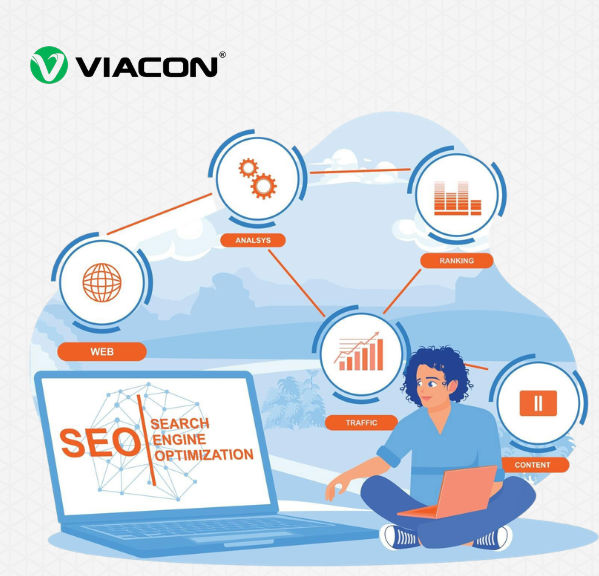
Modern web design has a direct impact on SEO performance. Factors such as page speed, mobile usability, interaction stability, and structured content influence search rankings through Core Web Vitals and mobile-first indexing.
Websites that deliver seamless user experiences are not only preferred by users but are also rewarded by search engines, making UX-driven design a critical ranking factor in the UAE’s competitive digital ecosystem.
Frequently Asked Questions About Web Design In The UAE:
Q1. Is Bilingual Web Design Mandatory For UAE Websites?
A: While not legally mandatory, bilingual web design is strongly recommended to improve accessibility, trust, and engagement across diverse audiences.
Q2. How Much Does Modern Website Design Cost In The UAE?
A: The cost depends on design complexity, features, and scalability needs. Modern frameworks may cost more upfront, but reduce long-term maintenance expenses.
Q3. Are Progressive Web Apps Better Than Mobile Apps For UAE Businesses?
A: PWAs offer app-like performance without downloads, making them ideal for mobile-first audiences and faster adoption.
Q4. Does Web Design Impact SEO Performance In The UAE?
A: Yes. Website speed, mobile usability, and user experience directly influence rankings through mobile-first indexing and Core Web Vitals.
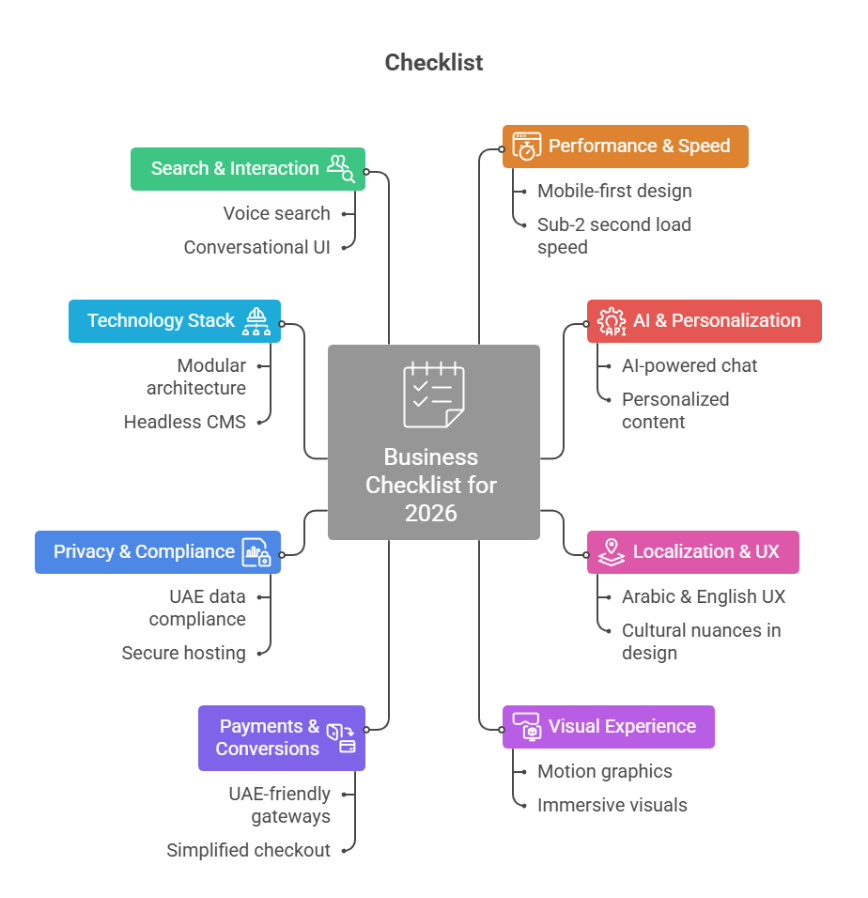
Checklist — What Your Business Should Do In 2026 To Stay Ahead
The UAE market is evolving rapidly, and business opportunities are increasing exponentially. This makes it an ideal place for businesses to scale up and grow in the coming years. At the same time, the market presents unique challenges, from a diverse customer base to varying internet access, making a brand's digital presence imperative to its success.
Now, to navigate these challenges and capitalize on opportunities, brands need a strong online presence, including a well-thought-out website. Modern websites are now powerful business tools that can adapt to user behavior, support local payment methods, offer app-like convenience, and deliver native-language content.
Therefore, by aligning design strategies with emerging trends, brands can create digital experiences that not only stand out visually but also drive engagement, conversions, and long-term growth.
Ultimately, in 2026, staying ahead means thinking beyond regular web design and focusing on meaningful, future-ready experiences that resonate with the UAE’s digitally savvy audience—now is the time to assess your website’s readiness.