Blogs / Pinterest SEO: How It Drives Evergreen Traffic?
Pinterest SEO: How It Drives Evergreen Traffic?
Pinterest SEO helps brands generate long-term organic traffic by optimizing pins, boards, and visuals for search intent. Unlike traditional social platforms, Pinterest content remains discoverable for months or years, making it ideal for sustainable traffic growth and top-of-funnel visibility.
January 23, 2026
Pinterest collected plaudits as a dedicated platform for sharing pictures, designs, and visual ideas. Nothing more. It was simple and clean, helping designers around the world get inspired and create magic.
Fast forward to 2026, and the platform has evolved into a full-blown digital marketing engine with clear and defined SEO potential. In the quest to diversify and avoid saturation across traditional channels.
Marketers are now increasingly looking at Pinterest as a capable platform to boost brand visibility and drive organic traffic through Pinterest SEO, leveraging optimized pins, keyword-rich boards, and visual search behavior to achieve sustainable discovery and long-term reach.
But the obvious question is: Is it even possible to use Pinterest to drive traffic to the website? If so, how does everything come about? Well, let’s find that out.
Your Guide To Driving Evergreen Traffic With Pinterest SEO
The potential of Pinterest is easily understandable in the data it records. The platform currently has more than 550 million active users, and this figure is growing by 11% every year. This makes Pinterest SEO even more important for brands that are looking to diversify and target unconventional channels for growth.
What Is Pinterest SEO And How It Works?
Before diving deep into the nitty-gritty of SEO on Pinterest, let’s understand what it is and how it works.
Unlike the other social media platforms, Pinterest works more like a search engine. So, in simple words, Pinterest SEOis the process of optimizing Pins, boards, profile, and website to make it rank higher in the Pinterest search results and feeds.
It combines relevant keyword targeting with visual appeal to enable the Pinterest search engine to better understand your content and present it to the right people.
That’s Why Pinterest SEO Strategy Requires Two Things -
The right keywords to inform Pinterest about what the content is all about.
High-quality visuals to attract users and increase engagement.
So, optimizing for Pinterest SEO means publishing the best designs and writing the most compelling descriptions. Once that is executed properly, you start noticing the benefits.
How To Rank Pins Higher Amid Algorithm Updates? To rank higher even during algorithm updates on Pinterest, focus on relevance, engagement, and consistent activity. Along with that, you also need to maintain content quality, use the right keywords and phrases, and adapt as per the performance.
Core Components Of Pinterest SEO
A successful Pinterest SEO strategy is not all about finding the quick success stories. Instead, it is more about taking time to build a system that continues to support content discovery. And, to do that successfully, here are the core components that you need to be wary of -
(i)Keyword Research
Pinterest keyword research is the most critical component of SEO on this platform. Why? Because it forms the backbone of everything you do here. As Pinterest functions like a search engine, keywords determine when and where your content appears in search results, making them a core part of effective digital marketing strategies aimed at improving discoverability, visibility, and long-term organic traffic growth.
Now, the question is, where to find the most relevant Pinterest keywords?
You Can Easily Find Them On -
Pinterest search bar autofill that reveals what the real users are thinking.
Pinterest Trends to locate seasonal topics and current trends.
Keywords research tools particularly designed for Pinterest.
However, when conducting keyword research, strike a balance between evergreen and trending topics to improve your content’s discoverability. Once you are done researching, you can categorize the Pinterest SEO keywordsin -
Broad keywords (high-level topics).
Mid-level keywords (more specific).
Long-tail keywords (high intent and low competition).
This structure helps you better plan content creation and publication that fulfill long-term and short-term growth targets.
(ii)Optimizing The Profile And Boards
The next core components of Pinterest-specific SEO to look at are the profile and boards. These elements act as an SEO landing page, and the search engine of the platform reads them to better identify the niche and determine where your pins belong.
Now, to optimize effectively, you need to start by including the primary keywords in your Pinterest profile name and bio.
Additionally, use clear, keyword-rich board titles and descriptions, and group related boards into a focus topic cluster. The well-organized boards increase topical authority and help Pinterest connect your content to relevant searches.
(iii)Pin Titles And Descriptions
Pin titles and descriptions are other key elements of Pinterest SEO. They help the platform algorithm to understand what your content is all about and when it should appear in the search. A well-optimized pin title should lead with the focus keyword and clearly communicate value to the users.
The description, on the other hand, should elaborate on the idea in a natural and lucid manner that is easy to understand. It should also include primary and secondary keywords. You can also use hashtags sporadically to add more relevance and improve discoverability.
However, overloading the title and description with keywords is not recommended, as it reduces readability and impacts performance.
Do Pinterest Pins Show Up In Google Search Results? Yes, Pinterest Pins show up in Google search results against the relevant queries. This is even more applicable for visual searches as Google indexes the pins as valuable visual content and drives organic traffic.
(iv)Visual And Technical Optimization
Visual and technical optimization are key pillars of Pinterest's marketing strategy. Even though it is a visual-heavy platform, simply designing random visuals will not help your cause. Instead, you need to align your creative ideas with the keywords and the niche you are targeting.
Here, it is important to remember that text overlays that match search intent help both users and Pinterest’s algorithm quickly understand the purpose of the pin.
Additionally, vertical designs optimized for mobile phones ensure better visibility in the feed, and technical improvements like Rich Pins provide Pinterest with additional metadata directly from your website.
Furthermore, when available, descriptive alt text further reinforces context and accessibility, making it easier for Pinterest to properly index and categorize your content.
(v)Balancing Evergreen Content And Fresh Pins
When the agenda is driving continuous traffic to the website, then evergreen content plays a key role. But they must be supported by a steady flow of fresh content. The content that is relevant across the year keeps attracting searches and saves over time, while the fresh content brings sudden traffic spikes.
This balance keeps the account active, signals consistency, and maximizes the long-term visibility of content.
How Pinterest Drives Evergreen Traffic?
The key differentiation between Pinterest and social media platforms is that the former works more like a search engine. Hence, instead of fading out over time, the pins continue to generate traffic for relevant searches.
Here is more on how Pinterest is driving evergreen traffic -
(i)Works Like A Search Engine
Pinterest works like a search engine where people search for visual ideas and inspiration using keywords, similar to what they do with Google. That’s why even if the content is published long-back, it continues to remain relevant and get discovered even after a few years and redirect traffic to your website.
(ii)Longer Content Shelf Life
Similar to search engines like Google, Pinterest also indexes the published content. As a result, it remains in the library and resurfaces over time, which means even after months and years of publishing, you can find it when you use the right key phrases.
Hence, content on Pinterest has a longer shelf life than on other social media platforms and continues to drive traffic to your site.
(iii)Direct Links To The Website
With Pinterest, you can enjoy consistent referral traffic throughout the year. Once you embed a direct link to your site, product pages, blog, etc., in the pins, users who click it will be redirected to the site for the next steps.
Does Deleting Old Pins Hurt Your SEO? Whether deleting old Pins will damage your Pinterest SEO depends on the content you are removing. If you are deleting the low-quality and irrelevant Pins, then you may not see any difference, but if you remove high-performing and popular Pins, then it will significantly affect the SEO.
Pinterest Marketing Strategy For Business Growth
Simply knowing how to rank on Pinterest is not enough; you need to have a comprehensive strategy to ensure business growth. For that, you need to take a step-by-step approach, which includes -
Step 1: Strengthening The Foundations
The first step of this process is establishing a strong foundation for the brand. Here, you need to work on the following -
First, you need to convert your Pinterest account into a business account to access the whole suite of analytics and custom pin formats.
After that, you must optimize the profile using the right keywords in the business description and verify the website.
And, you must add a save button to improve engagement and increase the scope of brand recall.
Step 2: Create A Comprehensive Content Strategy
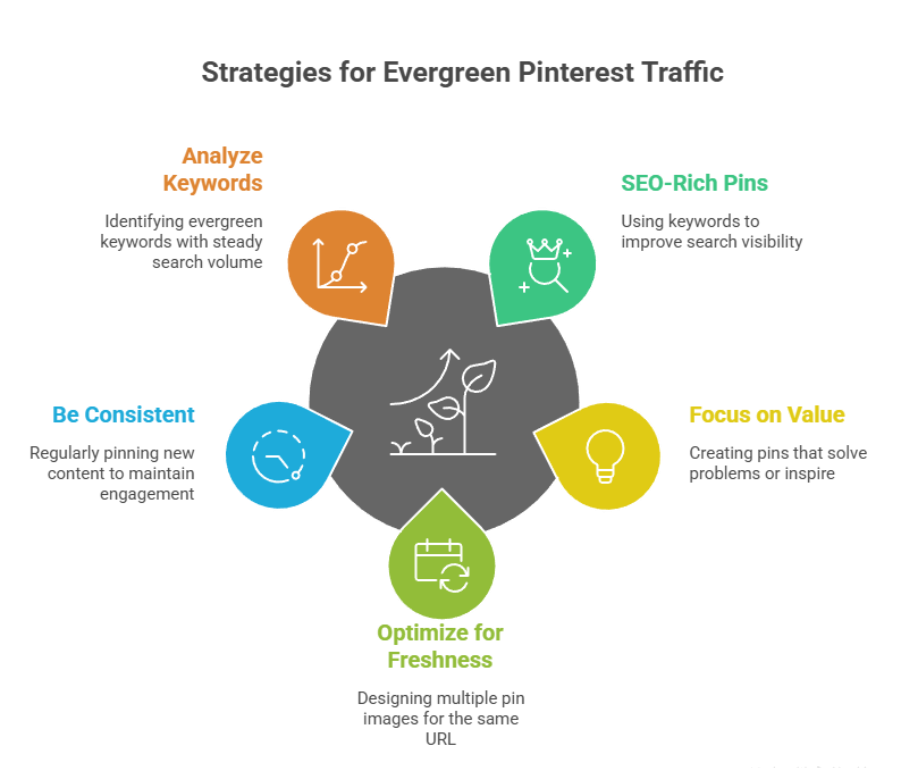
Next, you need to develop a comprehensive content strategy that starts with designing high-quality, fresh Pins. Here, you must focus on vertical images and videos as they perform the best.
Besides, you need to ensure that the pins you create align with each stage of the buyer’s journey. So, focus on creating separate pins for awareness, consideration, and purchase. Also, you need to align the content with Pinterest trends and marketing moments.
Step 3: Focus On Growth Tactics
Once the content part of the strategy is in place, focus on growth tactics. Start by creating a post-scheduling plan and tracking the trends to finalize the content strategy. Then you can use rich pins to add extra information, further improving the potential of your content.
Additionally, you need to analyse the platform data and content insights to refine the content plan for better impact. You should also strike a balance between organic and paid efforts to reach the right audience at the right time.
Step 4: Make The Most Of Platform Features
Lastly, you must focus on utilizing the platform features to make the most of your efforts. You can start by optimizing for Pinterest Lens, which lets users visually search for products. Then, make the most of Shoppable Pins and add direct shopping links to the product/service for easy shopping.
And, if you have an ecommerce business, then you can use the Catalogue feature to display products.
In short, Pinterest supports every stage of the marketing funnel. At the top, it helps with brand discovery; in the middle, it provides the information that nurtures interest and builds trust; and at the end, it offers elements like product links, offers, and testimonials to drive conversion.
To sum up, Pinterest SEO is a powerful long-term strategy for driving consistent, evergreen traffic and supporting sustainable business growth. By treating Pinterest as a search engine rather than a social platform.
Businesses can create content that continues to perform well long after it’s published. Therefore, with the right combination of keyword research, optimization, and consistency, Pinterest can become a reliable traffic and growth channel that compounds results over time.