Blogs / How Omnichannel Marketing Improves B2B Lead Quality And Sales Velocity In 2026?
How Omnichannel Marketing Improves B2B Lead Quality And Sales Velocity In 2026?
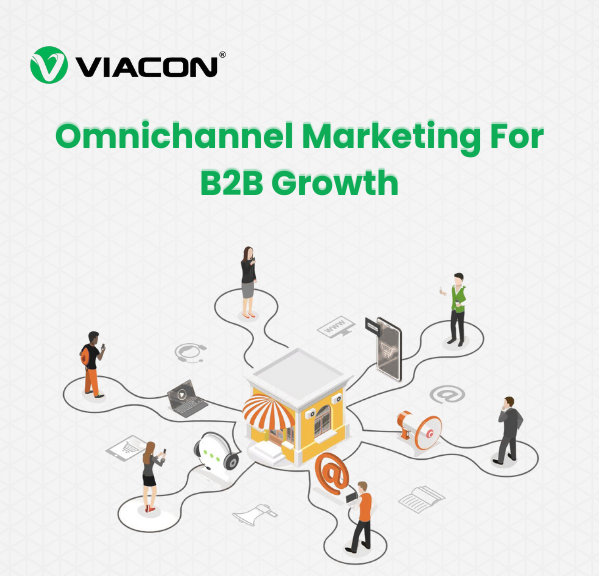
In 2026, omnichannel marketing aligns every B2B touchpoint into a unified buyer journey. This approach attracts higher-intent leads, improves engagement across channels, reduces sales friction, and helps teams close deals faster with better visibility and data continuity.
January 28, 2026
In 2026, the business landscape is going through a tectonic shift, and in ultra-competitive markets like Dubai, this is even more visible as brands continue to struggle for relevance and revenue.
Now, the question is what is driving this change? Well, the influx of technological advancements is altering how businesses work today, especially in the B2B segment. Today, buyers are moving fluidly across channels and learning about solutions in detail, forcing sales and marketing teams to rethink their approach.
In this environment, where traditional channel-by-channel marketing struggles to deliver qualified leads and sustain sales momentum, the omnichannel approach delivers on all parameters, improving lead quality and sales velocity by aligning data, customer engagement, and messaging across the entire sales process.
How Omnichannel Marketing Drives Higher-Quality B2B Leads And Faster Sales
In 2026,omnichannel marketing is the real difference-maker in the B2B segment. With longer sales cycles, more informed buyers, and increased competition, this marketing method is helping brands increase their revenue and ensure long-term growth.
How Omnichannel Marketing Improves B2B Lead Quality?
Here is how an omnichannel marketing strategy improves B2B lead quality -
(i)Qualifies Leads Using Cross-channel Intent Signals
Instead of trusting isolated actions, this marketing method assesses engagement patterns from multiple channels. This includes evaluating content consumption, repeat site or app visits, participation in webinars, social media interactions, and paid ads.
As a result, the leads are qualified based on consistency and depth of behaviour, which is a stronger indicator of buying intent.
(ii)Improves Signal Accuracy Through Channel Correlation
When a customer interacts across multiple channels with similar intent, it establishes buying intent. A buyer researching online and on social media platforms, and interacting with emails, demonstrates significantly higher readiness compared to those interacting through one touch point.
This marketing method assesses data collected across all channels and correlates them to reduce the risk of false positives. As a result, lead scoring precision improves, increasing conversion rates.
(iii)Creates Stage-based And Progressive Nurturing
This marketing method also focuses on delivering stage-based, progressive nurturing that improves the buyer’s experience and guides them through the journey.
For instance, while the early-stage prospects receive educational content, the later-stage buyers see more solution-driven messages with real-world proof, which leads to the maturity of the lead through conversion. It also helps prevent premature outreach that could harm prospects.
(iii)Captures Stakeholder Engagement
A B2B decision-making process involves multiple stakeholders, and this marketing method tracks engagement across roles at the same account level to understand when buyer interest expands beyond a single contact. This is an important signal of deal viability and lead quality.
What Are The First 3 Tools I Need To Move From Multichannel To A True Omnichannel Setup? The three tools that are must-haves to move from multichannel to omnichannel setup include Customer Relationship Management (CRM), Customer Data Platform (CDP), a unified Inventory Management System (IMS), and omnichannel Marketing Automation.
How Omnichannel Marketing Improves B2B Sales Velocity?
Here is how omnichannel marketingis playing a pivotal role in improving the B2B sales velocity -
(i)Reduces Friction Across Channels
Omnichannel customer experience is a critical component of success. And brands can ensure that by allowing buyers seamlessly move between channels. This reduces the friction and makes way for better buyer intent alignment.
When the stakeholders encounter the same narrative, objections are resolved faster, and consensus is formed quickly, leading to a notable improvement in sales velocity.
(ii)Creates A Faster Information Delivery Channel
Omnichannel marketing also plays a key role in creating a faster channel for information delivery. As a result, the buyers can quickly access all the necessary information, including product specifications, pricing, post-sales support, etc., which improves decision-making and fast-tracks the sales process.
(iii)Lowers Discovery Time
With this marketing strategy in full swing, the sales teams don't need to waste time in understanding the consumer. They enter the sales process with full knowledge of what the customer is looking for and the solutions they need to present.
Additionally, the buyer is also well-informed at this point. As a result, the overall time required to close the deal reduces, further accelerating the B2B sales velocity.
(iv)Maintains Momentum During Complex Decision Cycles
B2B business process, by design, is complex. There are multiple stakeholders involved, and decisions often get stuck due to budget constraints, internal doubts, differences in perspective, etc.
In these tricky scenarios, the omnichannel method continues to support the sales process through targeted content like case studies, testimonials, etc., to prevent disengagement.
What Is A 'Good' Sales Velocity Benchmark For An Omnichannel B2B Strategy In 2026? A ‘good’ sales velocity benchmark for omnichannel B2B strategy in 2026 is defined by coordinated speed, revenue-centricity, and efficiency. The top benchmarks for this year include optimal sales cycle (46-75 days), average deal velocity, qualified opp. winning rate, and conversion rate.
An Overview Of Omnichannel vs Multichannel Marketing
Here is a table outlining the difference between omnichannel and multichannel marketing -
Aspect
Multichannel Marketing
Omnichannel Marketing
Definition
Uses multiple channels independently to reach the target audience
Integrates all the channels into a unified customer experience
Channel strategy
Channels operate in silos
Channels are connected and work together
Customer experience
Inconsistent across touchpoints
Seamless and consistent across all touchpoints
Data collection
Data is collected per channel
Data is centralized and shared across channels
Personalization
Limited and channel-specific
Advanced and cross-channel
Customer journey
Fragmented, liner or disconnected
Non-liner and continuous
B2B lead quality
Leads usually lacks context, making them low-quality
Leads are enriched with full engagement history
Sales alignment
Marketing and sales are often misaligned
Strong alignment between marketing and sales due to shared insights
Scalability
Harder to scale due to fragmentation
Easier to scale due to uniformity
Why Does My Lead Quality Drop When I Increase The Number Of Marketing Channels? The main reason for the drop in lead quality after increasing the number of marketing channels is a shift in focus from precision to volume. It leads to dilution of targeted, high-intent prospects in favour of broader, lower-quality reach.
What Do You Need In Place Before Launching Omnichannel Marketing?
Making omnichannel marketing possible requires setting a strong foundation, which includes:
(i) A Strong Digital Presence
The first thing that you need to ensure before initiating the campaign is a strong digital presence. This includes a strong website and a prominent social media presence that support other online marketing efforts.
Additionally, this ensures consistent messaging, enabling you to cater to customers in the way they want, increasing the chances of success.
(ii)A Robust Customer Database
If you, as a business owner or a marketer, don't know whom to target, then all your efforts will be futile. So, having the right customer data is important to design and execute a successful marketing campaign.
A key point to remember here is that you must have a centralized database that gathers information from every touchpoint and ensures the whole team uses a single data source, reducing the chances of mistakes.
(iii)Deep Understanding Of The Target Audience
The next point that you need to cover before initiating a campaign and proceeding with marketing funnel optimization is acquiring a deep understanding of the audience.
Once you are aware of who your target audience is, what their preferences are, and their pain points, you can then tailor your approach accordingly to ensure the messaging remains relevant and resonates with the audience at every step of engagement.
(iv)Collaborating Mindset
Executing a marketing campaign is not a ‘one-man show’. An individual marketer or a particular department cannot execute a successful campaign if it is not supported by other departments.
The sales team, customer support department, operations, IT, and others have worked in tandem with the marketing team to successfully execute the campaign. Having a holistic infrastructure in place ensures customers enjoy a seamless experience from initial contact to post-sale support.
What Is The Best Way To Unify First-Party Data From LinkedIn, Email, And Webinars Into One Lead Score? The best way to unify first-party data from LinkedIn, Email, and Webinars into one lead score is to utilize a Customer Data Platform (CDP) or an advanced CRM like HubSpot Enterprise or Salesforce Einstein that supports multi-channel behavioural tracking and real-time score updates.
(v)Plan To Manage Conflicts
Lastly, managing conflicts while shifting to omnichannel conflicts is key to its success. Here, it is important to ensure that the change of marketing model doesn't affect existing sales channels and distributor relationships.
And to realize that you need to understand the buying journey, anticipate reactions, and clearly segment products by the marketing channels they belong to. This preparation ensures a smooth transition and reinforces customer trust.
To sum up, 2026 and beyond for the B2B businesses will be defined by their ability to understand buyer intent, curate messaging, and design campaigns that deliver results. But in this endeavour, what they need is a comprehensive, holistic approach that connects all marketing avenues rather than dealing with them individually.
The result of this approach, better known as omnichannel marketing, is compounding. Along with high-quality leads, shorter sales realization time, and more predictable outcomes, it also prepares the business for the years ahead and ensures the brand continues to shine in this evolving market.
Ready to scale with an omnichannel strategy? Let’s talk.