Blogs / Content Strategy For EdTech Startups Targeting The Middle East
Content Strategy For EdTech Startups Targeting The Middle East
EdTech is a recent addition to the Middle East’s academic landscape, but it is undergoing disruptive growth. But why The Middle East? What’s driving EdTech there?
August 21, 2025
The Middle East has a progressive economy, unmatched development cycles, and a robust and vibrant culture, with Dubai as the epicentre.
In the commercial landscape of the Middle East, technology-fueled businesses are taking the lead, with EdTech at the forefront.
EdTech is a recent addition to the Middle East’s academic landscape, but it is undergoing disruptive growth. But why The Middle East? What’s driving EdTech there?
For startups in this sector, the Middle East offers a podium of critical opportunities and unique hurdles. Here, the quality standard, cultural cohesion, and scalability of average businesses are quite high.
To win in this nuanced market, you need to develop a Content Strategy hinged on the effectiveness that clicks on a regional basis.
Meanwhile, the Middle East sees an excruciating rise in the number of digital-first learners now. Naturally, the growth of Edtech would be an inadvertent output in a market like this.
Why Are All Entrants Focusing On Dubai’s EdTech Landscape?
The edTech sector of Dubai is the most promising among all the vibrant Middle East markets like Cairo, Dubai, and Qatar. Last year’s stats show that the UAE EdTech market reached a valuation of $2.12 billion.
The tactical moves, like constant government innovation and prompt adoption, keep Dubai at the forefront of EdTech adoption.
Current pro-forma market analysis suggests that the UAE’s EdTec market would grow 3-fold to claim a valuation of $3.3 billion by 2033.
The diverse and tech-savvy market of Dubai, with its expat population, plays a pivotal role in dictating such high growth. All schools and universities in the UAE have embraced digital learning and AI.
They also compile the latest techniques, such as gamification, full mobile access, and the blended classroom model.
The recent projects, such as Smart Learning in Dubai and similar other campaigns supporting edTech growth in Dubai, play a dominant role too.
Why A Good Content Strategy Sways UAE’s EdTech Users?
UAE and many other Middle Eastern countries leverage global classrooms. Moreover, more than 50% of students in the upfront schools and universities in the Middle East are foreign nationals.
Hence, there is an increasing interest in bilingual content, preferably Arabic-English.
The families also expect more value from tuition and significant platforms that link learning outcomes with the mode of education. However, tech support lies at the basis of it all.
Now, coming to why content marketing strategies deliver sporadic growth to the edtech startups. In this digital age, the students in most institutions of the Middle East are deeply digital.
They're almost always tied to smartphones, cloud tools, and tablets. These gadgets are components of their daily lives.
Hence, exposure to digital marketing content is the new norm for them. They are always surrounded by a digital circuit that consists of different EdTech platforms for various learning niches.
Therefore, the exposure to brand marketing content is nothing new. Not only students, but also other stakeholders like parents, educators, policymakers, and governing members are exposed to the same line of brand messaging content.
The bottom line is that EdTech brands that can hit the sweet spot of content marketing will take away most leads and enjoy the highest conversion rates. The rest would stand out somewhere in the middle.
The Silhouette Of A Winning Content Strategy For The Middle East’s EdTech Market
Let’s go deep down into building a content pillar required by the Middle East EdTech content brands. We will also discuss the tangible steps for prompt success.
1. Loop In True Localization
The content has to be fine-tuned to touch down on the multicultural realities in Middle East nations, preferably Dubai, Cairo, and similar locations.
The content can also include legitimate success stories from the local schools that used the platforms and found success. Or flaunt testimonials from parents.
However, building a regional partnership with the Emirati educators to create instant brand rapport is the best policy. However, the EdTech Rands need an effective content schema to do that.
Otherwise, the top-line educators would not endorse the brands.
2. A Mobile First Content Interface
Around 99% of the internet and mobile penetration in Dubai entails students, teachers, and parents who prefer cross-device learning. Therefore, the content that is optimized for multiple devices will gain more popularity among this population.
Students also prefer to see short videos, micro-lessons, and self-contained modules, which are the key target audience for EdTech start-up brands.
Moreover, the lifestyle of cities like Dubai favours an on-the-move lifestyle. Hence, most short form and visually enabled content is suitable for brand promotions.
3. AI, Gamification, And Adaptive Journeys
AI is the new norm. It’s no longer hype. Therefore, EdTech platforms must leverage long blogs and guiding articles that educate students on the potential of AI in education.
You Can Create Blog Content Pillars On-
AI-adapted learning paths in personalized learning.
AI in real-time feedback sharing is used in self-evaluations.
And AI in gamification modules where game-based learning is leveraged.
The top-of-the-line EdTech platforms are already leveraging such content strategy. It’s high time the emerging brands also leveraged this strategy before it becomes outdated.
On that note, you can hire a marketing agency populated with locals who have a rich understanding of the regional preferences.
4. Transparency And Data Security
Most of the parents in Middle Eastern cities like Dubai are highly learned. That’s why winning their trust is paramount. That’s where the next form of content comes in. This is “explainer video”.
In these videos of variable lengths, EdTech providers have to share personalized messages related to the featured data privacy protocols of their platforms, progress reports of students using them, and explain the instructor credentials.
Alternatively, the marketing teams can host regular live webinars and community-oriented Q&As through podcasts, leveraging local teachers and experts from the EdTech industry.
5. Lead The Conversation
Align your blog, social media content or webinar around content keywords like “Dubai’s Top STEM careers”, “AI in Classrooms”, and “Smart study During Ramadan”.
Moreover, you can streamline your content with the government visions like Dubai 2030 or the UAE’s Smart City Project and release white papers citing measurable growth in Dubai's schools.
Here’s A Summary Of Viable Content Marketing Guidelines For The Middle East Market:
Content Format
Unique Value in Dubai
Performance/Trend
Bilingual (Arabic/Eng.)
Maximum inclusivity, parental buy-in
Essential for K-12
Short-form Videos
High engagement, mobile lift
Fastest growing
AR/VR Simulations
Enhances STEM, hands-on learning
An increase in top private schools
Gamified Quizzes
Motivation, “fun factor”
Used at all grade levels
Webinars/Workshops
Trust, B2B teacher engagement
Key for B2B & parent outreach
Dubai Student Stories
Local social proof, relatability
Drives up brand loyalty
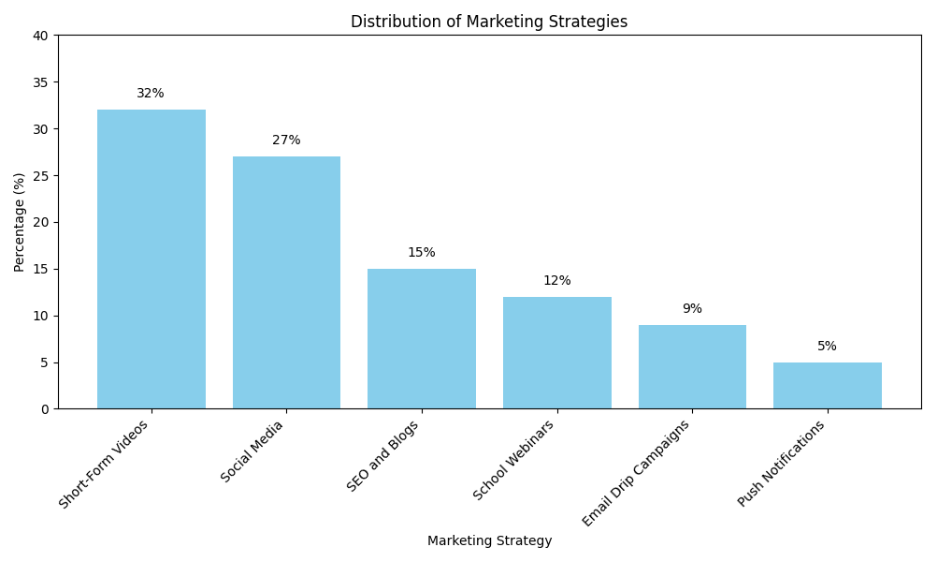
All content channels leveraged by Edtech marketers in the Middle East drive user growth to some extent. While visual and community-based content takes the lead, deep dive articles and articles for social media platforms also strike.
Here’s A Visual Arch Showing The User Growth Potential Of Different Types Of Content:
Micro-trends Highlighting The EdTech Content Marketing In The Middle East Now
These trends offer a clear idea of content channels that leverage instant value to EdTech brands in the Middle East market-
(i)AI Personalization
Popular platforms like Alef Education show the way with the creation of illustrative blogs and explainer videos on real-time progress made by students enrolled with them. The content ecosystem also includes smart test recommendations and curated learning paths.
(ii)Focusing On Early Childhood
With shifts in content policies emphasizing critical thinking from KG1, students need a personalized learning strategy. A learning mind-map for students from several standards, backgrounds, and linguistic niches can help EdTech brands increase their conversion rates.
(iii)Upskilling Teachers
Schools have to leverage edTech for teachers as well. On that note, content such as explainer blogs and regional case studies can help EdTech companies see traction in the Middle East.
(iv)Action Plan
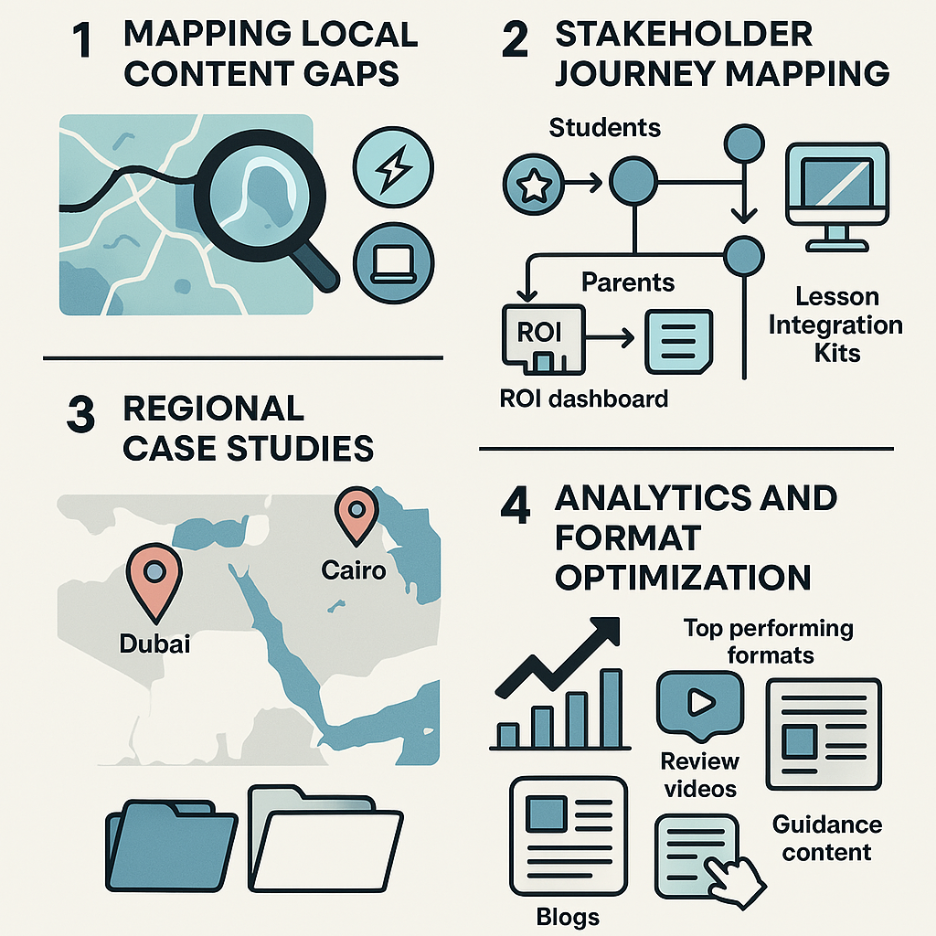
In this action plan, our marketing team has crafted a dedicated analysis of the EDtech content marketing landscape you need, as a startup Edtech firm.
Start with mapping the Local marketing Content gaps in the EdTech sector. Ensure that you create fast-loading content, which can be easily accessed across multiple screen types.
Next, you have to create a detailed mapping of stakeholder journeys. You can tap into gamification theory to create decent student learning paths. Or sync with parents by creating ROI and real-time progress dashboards. To make your content appealing to teachers, your content can include lesson integration kits.
In this step, you have to create real case studies based around the region (for ex., Dubai, Cairo, etc.)
In the final step, use analytics to highlight the top-performing formats. You can review viral social videos and create blogs and guidance videos for extensive engagement.
Make Content Your Dubai Differentiator
The most promising opportunities in the Middle East EdTech are available to brands leveraging the best content strategy from around the world.
Your blogs, videos, and guides must resonate with the diversity, student ambitions, teaching plans, and government projects in the Middle East.
Don’t forget to double down on AI in learning, case studies, success stories, and local relevance. Lastly, your content should be laser-focused on themes like measurable student performance and parent trust.
Often, startups don’t have the resources or think tank to leverage a decorative content roadmap or content ecosystem like this.
A local Dubai-based content marketing agency with a thick knowledge of Edtech and local clientele can help!